
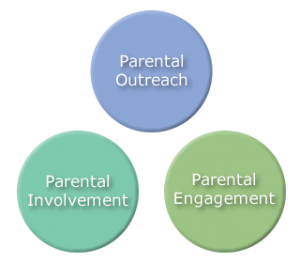
Improving family involvement and engagement must include a concentrated focus on increasing knowledge and creating a partnership between immigrant families, school staff, and community organizations.
To adhere to Title III, Part A requirements, LEAs are not only responsible for enhancing instructional opportunities but must engage in parent and family outreach. The LEA/campus has an opportunity to engage in family involvement and family engagement.
It is important to consider the following before implementing activities for immigrant families:
- Cultural differences
- Cultural awareness
- Levels of approachability
- Response method to questions/concerns
- Families' potential views about parent involvement
- Families' potential views about parent engagement
Planning and organizing activities to support family involvement and engagement, such as family literacy programs and trainings, will enhance instructional opportunities for immigrant children and youth. These activities may be coordinated with community-based organizations, institutions of higher education, or private sector entities with expertise in working with immigrants.
LEAs/campuses can focus additional support in basic instructional services. Below are examples of activities that may need further explanation for immigrant students and their families:
- Course schedules (e.g., child will have more than one teacher and more than one classroom)
- Physical layout of the school
- Homework policy and purpose, progress report and report card descriptions
- Attendance policy (e.g., mandatory phone call and note when child is sick)
- Explanation of the campus discipline policy and immunization policy
- Dress code, winter clothing, and physical education uniforms
- Cafeteria options, subsidized lunch applications, and transportation options to and from school
- Back-to-School Night information
- Parent-teacher conference dates and purpose
- Afterschool clubs and sports options
- Special education services
- Summer school availability
- The role of guidance counselors and other nonteaching staff (USDE, 2015a; USDE, 2015b)
LEAs/campuses must focus on establishing meaningful two-way communication between school staff and immigrant families to develop relationships and help identify and address the needs of immigrant families. Considering and addressing capabilities, connections, confidence, and cognition can assist the LEA/campus in ensuring all needs are met (Chu-Zhu, n.d.).
Once the LEA/campus stakeholders understand the essential links between capabilities, connections, confidence and cognition, they will be able to engage in partnerships to support student achievement and student learning. Building the capacity of staff and families to engage in partnerships is a crucial component of parent and family outreach. A few suggested activities an LEA/campus may provide are
- tutorials, mentoring, and academic or career counseling;
- programs of introduction to the educational system and civics education; and
- contact information for community-based organizations, institutions of higher education; and private sector entities with expertise in working with immigrant students and families.
To establish an inclusive school environment, all LEA stakeholders must foster communication with immigrant families from diverse backgrounds and cultures, as well as cultivate home-school partnerships of common responsibility for immigrant student success.
Title III, Part A-funded LEAs are held accountable and are responsible for meeting the needs of immigrant children and youth. Such LEAs must be purposeful in providing activities that
- enhance instructional opportunities with effective educational programs;
- assist immigrant children and youth to achieve high levels in state academic standards;
- sustain effective language instruction educational programs; and
- promote parental, family, and community participation.
